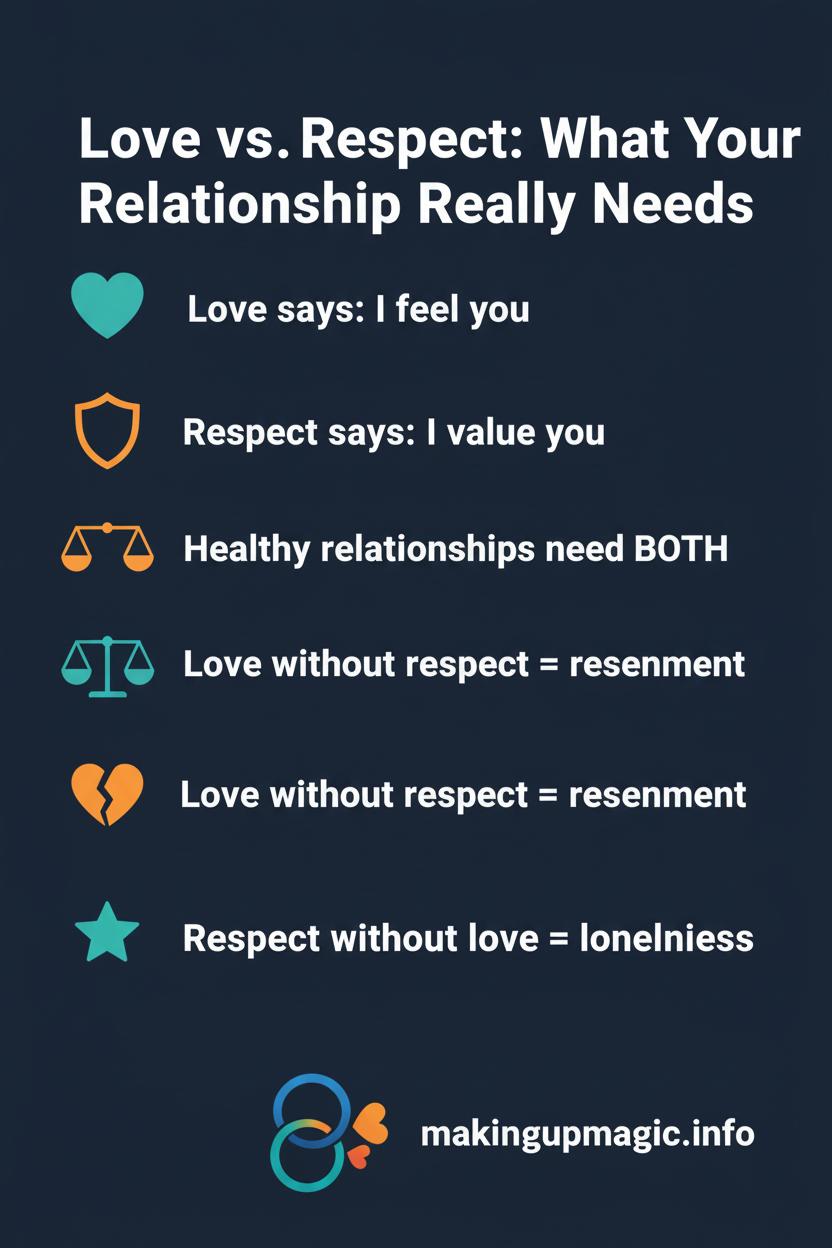
- Love and respect are not the same thing — and you need both.
- Love without respect breeds resentment. Respect without love feels cold.
- Most relationship breakdowns trace back to a love-respect imbalance.
- You can rebuild both — but it starts with understanding the difference.
- 👇 Keep reading for the full breakdown, real examples, and what to do next.
I remember sitting across from my ex at a coffee shop about six months after we broke up. We’d agreed to “just talk.” And within ten minutes, she said something that stopped me cold.
“Robert, I always knew you loved me. I just never felt like you respected me.”
That hit differently than anything else she’d ever said. Because I thought love was enough. I thought if I loved someone hard enough, everything else would follow.
I was wrong.
And here’s the thing — I’d been running that same pattern my whole life. I grew up watching my mum, my brothers, my cousins all love fiercely and still lose each other. Nobody ever taught us that love without respect is like a fire without oxygen. It burns bright for a while. Then it suffocates itself.
 If you’re here asking about the love vs respect difference — whether in a current relationship, a broken one, or one you’re trying to rebuild — you’re already asking the right question. Most people never do.
Let’s break it all the way down.
- What Is the Difference Between Love and Respect?
- Why Both Love and Respect Matter in a Relationship
- What Happens When There’s Love Without Respect
- What Happens When There’s Respect Without Love
- Signs of a Love-Respect Imbalance
- How to Balance Love and Respect
- How to Start Speaking His Language
- How to Rebuild Respect After a Breakup
- Which Program Actually Teaches This?
- Frequently Asked Questions
What Is the Difference Between Love and Respect?
Here’s the simplest way I can put it:
- Love is how you feel about someone.
- Respect is how you treat someone.
You can feel love deeply and still treat someone poorly. You can respect someone enormously and feel nothing romantic toward them. They’re related — but they’re not the same.
Love is emotional. It’s warmth, attachment, longing, care. Respect is behavioral. It’s how you speak to someone, whether you honor their boundaries, whether you value their perspective even when it differs from yours.
The importance of love versus respect becomes crystal clear when one is missing. A relationship with love but no respect feels suffocating. A relationship with respect but no love feels like a business arrangement.
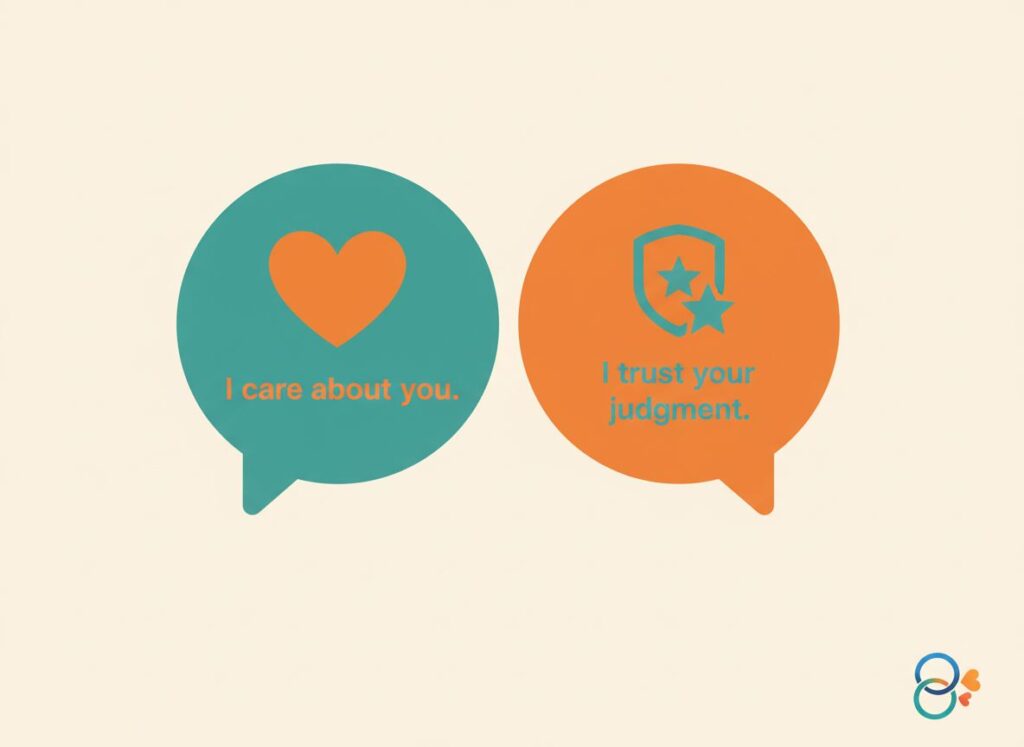
Think of it this way: love is the reason you stay. Respect is the reason they want you to.
Why Both Love and Respect Matter in a Relationship
Think of love and respect as two legs of a table. Remove one and the whole thing collapses.
Research consistently shows that how love and respect impact relationships goes far deeper than most people realize. Dr. Emerson Eggerichs, in his widely cited work on relationship dynamics, argues that men tend to feel love through respect, while women tend to feel respect through love — but in practice, everyone needs both, regardless of gender.
When both are present:
- Conflict gets resolved faster because both people feel safe.
- Attraction stays alive because admiration fuels desire.
- Trust deepens because actions consistently match words.
When one is missing, you get what I call the Cycle-Breaker gap — a slow erosion where one person starts pulling away, and the other can’t figure out why. If you’ve ever felt like your partner loves you but doesn’t see you, that’s the gap.
This dynamic is especially destructive when it collides with attachment patterns. If you’ve ever found yourself chasing harder the more someone pulls away, read our deep dive on the anxious avoidant trap — because love-respect imbalance is almost always at the root of it.
What Happens When There’s Love Without Respect
This is the most common pattern I see. And honestly? It’s the one I lived for years.
Love without respect looks like:
- Interrupting your partner mid-sentence because you’re sure you know better.
- Making decisions for them “because you love them.”
- Dismissing their feelings as overreactions.
- Using love as a reason to ignore boundaries.
- Saying “I love you” while consistently letting them down.
The result? Resentment. Slow, quiet, devastating resentment. Your partner starts to feel like a child in the relationship — cared for, but not valued. And eventually, they leave. Not because the love died. But because they couldn’t breathe.
I did this. I loved her completely and controlled her subtly. I thought I was protecting her. She felt managed. There’s a version of love that looks like care on the outside and feels like a cage on the inside. That’s love without respect.
The hardest part? The person doing it usually has no idea. They’re not trying to be controlling. They’re trying to love. But love without respect doesn’t land as love. It lands as pressure.
What Happens When There’s Respect Without Love
This one’s less talked about, but just as damaging.
Respect without love looks like:
- A relationship that functions perfectly on paper but feels emotionally empty.
- Partners who are polite, considerate, and completely disconnected.
- No conflict — but also no real intimacy.
- Feeling like roommates who are very good at being roommates.
This often happens in long-term relationships where the emotional spark has faded but neither person wants to admit it. The respect is real. The love has gone quiet.
It’s a different kind of lonely. You’re not being treated badly. You’re just not being felt. And after a while, that absence becomes its own kind of pain.
The good news? Emotional connection can be rebuilt. But it requires honesty — and usually, a willingness to look at the mistakes that created the distance in the first place.
Signs of a Love-Respect Imbalance in Your Relationship
Not sure which side of the imbalance you’re on? Here are the signals:
Signs of Love Without Respect
- Your partner says “I love you” but regularly dismisses your opinions.
- You feel controlled, even if it comes from a place of care.
- Apologies happen, but the behavior doesn’t change.
- You feel loved but not liked.
Signs of Respect Without Love
- Everything is “fine” — but nothing feels exciting or alive.
- You’re treated well but not pursued.
- Physical and emotional intimacy has quietly faded.
- You feel more like colleagues than partners.
Signs of Both Being Present ✅
- You can disagree without it becoming a war.
- You feel genuinely seen and valued.
- Attraction and admiration coexist.
- You want to be around each other — not just out of habit.
If you’re reading this after a breakup, understanding which imbalance existed in your relationship is crucial before you reach out. Check out our guide on will my ex come back — because the answer often depends on whether this imbalance has been acknowledged.
How to Balance Love and Respect in a Relationship
Here’s the practical part. Because understanding the problem is only half the work.
1. Separate Feelings From Actions
Love is a feeling. Respect is a choice you make every day. Start treating them as separate responsibilities. You don’t get to skip respect because you feel love.
2. Listen to Understand, Not to Respond
One of the most respectful things you can do is genuinely hear someone. Not wait for your turn to talk. Not mentally prepare your counter-argument. Actually listen. This single shift changes the entire energy of a relationship.
3. Honour Boundaries — Even When It’s Inconvenient
Boundaries aren’t walls. They’re the rules of engagement that make love feel safe. When you consistently honor your partner’s boundaries, you’re saying: I love you AND I respect you.
4. Express Appreciation Specifically
Don’t just say “I love you.” Say why. “I love how you handled that situation with your mum today” is both love and respect in one sentence. Specificity signals that you’re actually paying attention.
5. Repair Quickly After Conflict
Every couple fights. What separates healthy relationships is the repair. Learning how to apologize effectively — not just saying sorry, but showing changed behavior — is one of the highest forms of respect.
And if you want to go deeper on the connection piece, quality time as a reconnection tool is something I’ve written about extensively over at Changing the Cycle — it’s one of the most underrated ways to rebuild both love and respect simultaneously.
How to Start Speaking His Language
Here’s something most relationship advice gets wrong: it assumes everyone receives love the same way.
They don’t.
For a lot of men — and I say this from lived experience, not theory — respect is love. When a woman respects a man, he feels loved. When she doesn’t, no amount of affection fills that gap. He might not be able to articulate it. He might not even know that’s what’s missing. But he feels it. And over time, he starts to pull away.
Researcher Shaunti Feldhahn spent years surveying men about their deepest emotional needs in relationships. Her findings were consistent: the majority of men would rather feel alone and respected than loved and disrespected. That’s not ego. That’s wiring.
So what does speaking his language actually look like in practice?
Ask Before Advising
When he shares a problem, resist the urge to fix it immediately. Ask first: “Do you want my thoughts, or do you just need me to hear you?” That question alone communicates enormous respect. It says: I trust your ability to handle this. I’m here either way.
Verbalize Admiration Out Loud
Men rarely hear “I’m proud of you” or “I really admire how you handled that.” Say it. Specifically. Not as flattery — as genuine observation. The difference between a man who feels respected and one who doesn’t is often just this: someone noticed, and said so.
Thank the Effort, Not Just the Result
“Thank you for trying” lands differently than silence when something didn’t go perfectly. Acknowledging effort — even when the outcome wasn’t ideal — tells him his contribution matters. That’s respect in action.
And this works both ways. If you’re the one who needs to feel more respected in the relationship, these same principles apply. Modelling the behavior you want to receive is one of the most powerful relationship tools there is.
How to Rebuild Respect After a Breakup
If you’re here because a relationship just ended — or because you’re trying to rebuild one — this section is for you.
Most breakups aren’t caused by a lack of love. They’re caused by a breakdown in respect. And that’s actually hopeful. Because respect is a skill. It can be learned, rebuilt, and demonstrated.
I’ve seen it happen. I’ve lived it. But here’s what nobody tells you about the rebuild:
You cannot rebuild respect through desperation.
Begging, over-texting, grand gestures — these signal the opposite of respect. They signal that you’ve lost respect for yourself. And if you’ve lost it for yourself, how can you offer it to someone else?
Phase 1 — Silence
The first phase of rebuilding respect is stopping the behaviors that eroded it. That usually means no contact — not as a game, but as a genuine reset. Space creates perspective. It also creates the conditions for them to remember who you were before the breakdown, not just who you became during it.
For a full breakdown of how this works, read our guide on the psychology behind making your ex miss you — it goes deep on why distance is often the most respectful thing you can do.
Phase 2 — Signal
This is where the internal work becomes visible. Not through announcements or social media performances — through quiet, consistent change. You start showing up differently. In how you carry yourself. In what you talk about. In the energy you bring to every interaction.
Rebuilding trust after a breakup is closely tied to this phase. It’s not about proving yourself — it’s about becoming someone whose actions are worth trusting again. I’ve written about this in depth over at Changing the Cycle’s guide to rebuilding trust after a breakup — it’s one of the most important pieces in the whole reconciliation puzzle.
Phase 3 — Reconnect
When you do reach out, you reach out from a place of strength — not need. The tone is calm. The message is light. There’s no agenda hidden underneath it. That energy is felt immediately. It’s the difference between a text that makes them smile and one that makes them anxious.
If you’re at the stage of thinking about reaching out, our guide on what to text your ex after no contact walks you through exactly how to do it in a way that communicates both confidence and care.
And if you’re not sure whether reconciliation is even the right move, take the 60-second Breakup Clarity Quiz — it’ll help you get clear on where you actually stand.
Which Program Actually Teaches This?
If you’ve done the reading and you’re ready to go deeper with a structured system, here’s an honest comparison of the three programs I recommend most — specifically through the lens of love vs respect.
| Program | Best For | Respect Focus |
|---|---|---|
| His Secret Obsession | Women wanting to reconnect emotionally with a man | ⭐⭐⭐⭐⭐ Core concept — built entirely around the hero instinct and male need for respect |
| Ex Factor Guide | Men and women — full step-by-step reconciliation system | ⭐⭐⭐⭐ Strong — covers attraction, communication, and the rebuild in depth |
| Text Your Ex Back | Texting-first reconnection — best as a starting point | ⭐⭐⭐ Good — teaches tone and framing that communicates respect through messaging |
My top recommendation for this specific topic — rebuilding respect and emotional connection — is His Secret Obsession. It’s the only program built around the core psychological principle that men experience love through respect. If that’s the gap in your relationship, this is the most targeted tool available.
Not sure which one is right for your situation? Read our full breakdown: best program to get your ex back.
🔑 Ready to Rebuild — But Not Sure Where to Start?
The Ex Factor Guide is the most comprehensive step-by-step system for rebuilding attraction and respect after a breakup. Thousands of people have used it to reconnect — the right way.
 Robert Martin Lees is a relationship coach and the founder of MakingUpMagic.info. After navigating his own painful breakup and rebuilding a relationship from the ground up, Robert has spent years helping others understand the psychology of love, respect, and reconnection. His Cycle-Breaker framework has helped thousands of readers move from heartbreak to clarity — and in many cases, back to the relationship they thought was gone forever. Read Robert’s full story →
Frequently Asked Questions
What is the difference between love and respect in a relationship?
Love is an emotional feeling of deep affection and attachment. Respect is a behavioral choice — how you treat someone, honor their boundaries, and value their perspective. Both are essential. Love without respect leads to resentment; respect without love leads to emotional emptiness.
Is love or respect more important in a relationship?
Neither is more important — they work together. Most relationship experts agree that what matters most is the balance between the two. Love provides the emotional foundation; respect provides the daily structure that keeps that foundation strong.
Can you love someone and not respect them?
Yes, and it’s more common than people admit. You can feel genuine love for someone while still dismissing their opinions, ignoring their boundaries, or treating them as less capable than you. This is one of the most painful relationship dynamics because the love is real — but the damage is also real.
How do love and respect impact relationships long-term?
Long-term, relationships with both love and respect tend to be more resilient, more satisfying, and better at navigating conflict. Relationships missing one or both tend to erode slowly — often without either partner fully understanding why until significant damage has been done.
How do I balance love and respect in my relationship?
Start by treating them as separate responsibilities. Love is a feeling; respect is a daily practice. Listen actively, honor boundaries, express specific appreciation, and repair conflict quickly. Over time, these habits create a relationship where both people feel genuinely valued.
How do I rebuild respect after a breakup?
The rebuild happens in three phases: Silence (stop the behaviors that eroded respect), Signal (do the internal work and let it show), and Reconnect (reach out from strength, not need). Desperation signals low self-respect — which is the opposite of what you’re trying to communicate.
Can a relationship survive without respect?
Technically yes — but it won’t thrive. Relationships without respect tend to become controlling, resentful, or emotionally hollow over time. Love alone is not enough to sustain a healthy partnership.
How does self-respect affect your relationship?
Enormously. When you respect yourself, you set clearer boundaries, communicate more honestly, and attract partners who treat you well. Low self-respect often leads to tolerating poor treatment — and sometimes, to chasing relationships that aren’t healthy. Self-improvement after a breakup is often where this work begins.
Not sure where your relationship stands? Take the free 60-Second Breakup Clarity Quiz — get personalised insight in under a minute. 💚


This is a thoughtful and insightful perspective on the often misunderstood balance between love and respect in relationships. I appreciate how you clearly distinguish love as an emotional experience and respect as the actions that sustain trust, boundaries, and long-term connection. The practical examples and personal reflection make the concept both relatable and instructive for readers navigating relationship challenges. Understanding this balance can be a powerful step toward building healthier, more resilient partnerships.
Hi Kavitha, thank you so much for your kind words. You hit on something vital there—the idea that love is the ‘feeling’ but respect is the ‘action.’
In my experience, most breakups don’t happen because the love ran out; they happen because the respect was eroded over time. When we focus on rebuilding that foundation of respect first, the love often has a safe place to return to. I’m so glad the practical examples resonated with you. Building those resilient partnerships starts with that one distinction!
Best,
Robert