
You know that moment when you check your phone for the tenth time tonight, hoping his name lights up the screen?
I’ve been there. And I know exactly how much that silence hurts.
There were days I couldn’t get off the couch. Not wouldn’t — couldn’t. The weight of it was physical. I’d stare at the ceiling and think: this is it. This is what the rest of my life feels like. Everything I’d built, everything I’d believed in — gone. Depression doesn’t announce itself. It just quietly takes over, until one day you realise you haven’t laughed in weeks and you can’t remember the last time you felt like yourself.
Depression after a breakup isn’t weakness. It’s love with nowhere to go.
But here’s what I also know — and what I wish someone had told me back then: moving on is a skill, not a feeling. You don’t wait for it to arrive. You build it, step by step, even on the days it feels impossible.
This guide is the roadmap I wish I’d had. Seven honest steps — no toxic positivity, no “just keep busy” nonsense. Real tools, real psychology, and the truth about what your brain is actually doing right now.
Before we dive in, if you’re not sure whether you want to move on or get him back, take two minutes to Take the 60-second Breakup Clarity Quiz — it’ll help you get clear on where you actually stand.
What Does Moving On From an Ex Boyfriend Actually Mean?
Let’s clear something up right away — because most people get this wrong.
Moving on doesn’t mean you stop caring. It doesn’t mean you pretend it didn’t matter, or that you have to hate him to heal. It doesn’t even mean you stop loving him.
Moving on means you stop making your future dependent on his choices.
It means you reclaim the energy you’ve been pouring into someone who isn’t pouring it back. It means you start building a life that feels worth living — whether he’s in it or not.
That’s a subtle but enormous shift. And it starts with understanding what’s actually happening inside you right now.
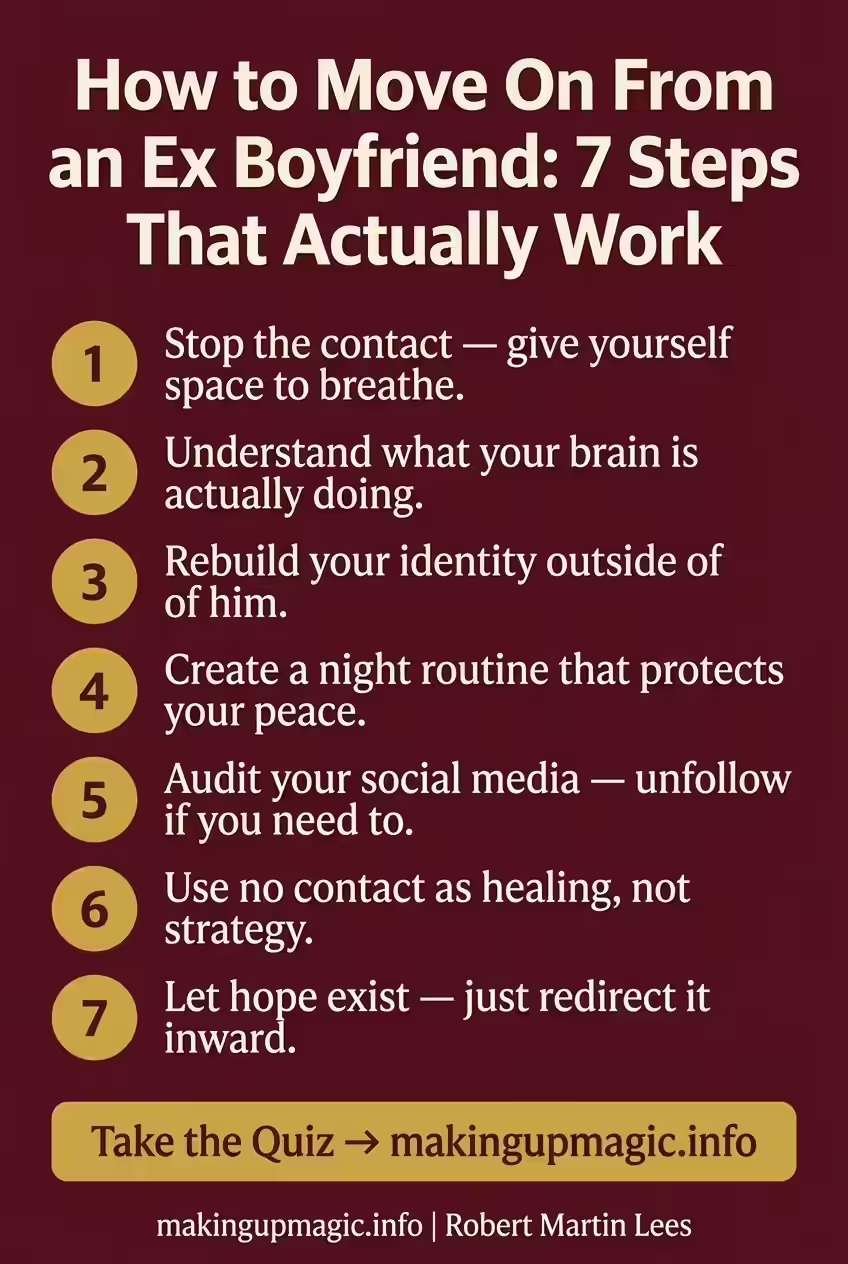
Step 1: Stop the Contact — Give Yourself Space to Breathe
I know. You’ve heard this before. And I know how hard it is.
But here’s the thing nobody tells you about staying in contact with your ex: every text, every check-in, every “just seeing how you are” resets your emotional clock back to zero. You can’t heal a wound you keep reopening.
This isn’t about punishing him or playing games. It’s about giving your nervous system the space it desperately needs to start regulating again.
If you’re struggling with whether no contact is the right move for your situation, our complete no contact guide walks you through exactly when and how to use it — and what to expect when you do.
The first 72 hours are the hardest. Then it gets easier. Not easy — but easier.
Step 2: Understand What Your Brain Is Actually Doing

This is the step most healing guides skip entirely. And it’s the most important one.
Your heartbreak isn’t just a feeling. It’s a chemical withdrawal. Research from neuroscientists shows that romantic love activates the same reward pathways in the brain as addictive substances. When that relationship ends, your brain goes into genuine withdrawal — craving, obsessing, bargaining.
That’s why you check his Instagram at 2am. That’s why you replay the last conversation on a loop. That’s why you feel physically sick. You are not weak. You are wired.
Understanding this changes everything. Because once you know it’s neurological, you stop blaming yourself — and you start working with your brain instead of against it.
The book Attached: The New Science of Adult Attachment is the single best resource I’ve found for understanding why you feel the way you do right now. It explains the science behind anxious attachment — why you feel overwhelmingly drawn back to him even when you know it’s not good for you.
Knowledge is the first step out of the fog.
Step 3: Rebuild Your Identity Outside of Him
Here’s a question I ask every person I coach: Who were you before him?
Most people pause. Then they realise — they’ve forgotten.
When we’re in a relationship, especially a long or intense one, our identity quietly merges with the other person. Their preferences become ours. Their social circle becomes ours. Their opinion of us becomes how we see ourselves.
When they leave, it doesn’t just feel like losing a person. It feels like losing yourself.
Rebuilding your identity isn’t about becoming someone new. It’s about remembering who you already are — and giving that person room to breathe again.
Start small. One thing a day that is purely, unapologetically yours. A walk. A playlist. A book. A conversation with someone who knew you before him.
For deeper work on this, our guide on self-improvement after a breakup gives you a full framework for rebuilding from the inside out.
Robert’s Reading List for This Stage
- Getting Past Your Breakup — Susan Elliott. A no-nonsense, step-by-step roadmap to actually grieving the relationship and coming out stronger.
- Breakup Bootcamp — Amy Chan. Rewires your neural pathways to disconnect from the “addiction” of your ex using practical psychology.
- The Five Minute Journal — Forces you back into an abundance mindset in a way that feels doable, not overwhelming.
Step 4: Create a Night Routine That Protects Your Peace
Breakups don’t just happen in your mind. They happen in your body.
When the sun goes down, cortisol spikes. The anxiety hits hardest. The urge to text him is strongest. This isn’t a character flaw — it’s biology. And you can work with it.
A deliberate evening routine is one of the most underrated healing tools there is. Not because it fixes the pain — but because it gives your nervous system a predictable, safe container when everything else feels chaotic.
Here’s what I recommend building into your evenings:
- Phone away by 9pm. Not on silent — away. The kSafe time-lock box is genuinely brilliant for this. You physically cannot access your phone for a set period. Willpower alone isn’t enough at 2am.
- Weighted blanket. This isn’t indulgent — it’s neurological. The deep pressure mimics being held and dramatically reduces cortisol. Blankease makes excellent ones.
- Sleep anchor. The Hatch sleep machine enforces a soothing sleep and wake routine. Sleep deprivation makes you ten times more likely to emotionally text him in the morning.
- Journalling. Not a diary — a release. Burn After Writing gives you a safe, private space to write down all those raw, unedited emotions without sending them to anyone.
For the science behind optimising your sleep during emotional stress, Huberman Lab’s Sleep Toolkit is the most evidence-based free resource available.
Step 5: Audit Your Social Media — Unfollow If You Need To
Checking his follower count isn’t going to give you the closure you want.
It’s just going to reset your healing clock back to zero.
I’m not saying delete him from your life forever. I’m saying: right now, in this season, you need to protect your attention. Every time you see his name, his face, his stories — your brain fires the same craving response. You are literally re-triggering withdrawal.
Unfollow. Mute. Block if you need to. This is not dramatic. This is self-preservation.
The Freedom app lets you block specific websites and social profiles across all your devices. Use it. Outsource your willpower to technology — that’s what it’s there for.
Step 6: Use No Contact as Healing, Not Strategy
Here’s where I want to be really honest with you.
A lot of content online tells you to use no contact as a tactic — a way to make him miss you, to trigger his psychology, to get him back. And look, there’s truth in that. Silence does create space for reflection.
But if that’s your only reason for going no contact, you’re going to suffer through it instead of grow through it. You’ll be white-knuckling every day, counting down until you can reach out again.
The real power of no contact is what it does for you.
It gives your nervous system time to regulate. It gives your identity time to re-emerge. It gives you the clarity to figure out what you actually want — not just what the withdrawal is screaming at you.
Tools that genuinely help during this phase:
- Breakup Buddy app — 24/7 pocket coach with CBT exercises timed to reframe your thoughts when the urge to reach out hits hardest.
- Headspace — Specialised courses on navigating change stop the obsessive thought loop dead in its tracks.
And if you’re wondering what happens on the other side of no contact — what to actually say when you’re ready — our guide on what to text your ex after no contact has you covered.
Step 7: Let Hope Exist — Just Redirect It Inward
Recovery didn’t feel like a victory lap for me. It felt like one morning I woke up and the first thought wasn’t about her. It was just… a thought about the day. Small. Ordinary. And somehow, enormous.
It crept in like that — slowly, in the margins. I started to feel like I was worth something again. Not because she came back. Not because anyone validated me. But because I’d done the work, faced the ugly parts, and was still standing.
The hope I found wasn’t “I’ll get her back.” It was “I’ll be okay either way.”
And that — that right there — is actually when the real chance of getting her back began.
The moment you stop needing them back is often the moment they start coming back.
So let hope exist. Just stop aiming it entirely at him. Aim some of it at yourself. At the version of you that’s quietly being rebuilt through all of this.
?️ Robert’s Full Toolkit for Moving On
I’ve put together a carefully curated list of everything I personally recommend for this stage — the apps, books, and nervous system tools that actually work. Not bath bombs. A real psychological toolkit.
? The Cycle-Breaker Perspective
Here’s something most healing guides won’t tell you: if you keep ending up in the same painful patterns — the same type of relationship, the same kind of ending — moving on from this ex isn’t enough.
The real work is understanding why you keep running the same cycle. My earliest memory of love is my dad’s knee. I was two years old, and he was telling me he was leaving. That feeling — of someone you love disappearing — became my template. I didn’t know I was running a programme I’d inherited. Until I finally understood why.
You can’t break a cycle you don’t know you’re in.
If this resonates, the team at Changing the Cycle do extraordinary work helping people identify and break these deeper patterns for good.
Frequently Asked Questions
How long does it take to move on from an ex boyfriend?
Most research suggests it takes roughly half the length of the relationship to fully process a breakup — but this varies enormously. What matters more than the timeline is the quality of your healing. Rushing it by staying in contact or jumping into a new relationship typically extends the pain, not shortens it. Focus on the steps, not the clock.
Is it normal to still love your ex boyfriend while trying to move on?
Completely normal — and it doesn’t mean you’re doing it wrong. Love doesn’t switch off because a relationship ends. Moving on doesn’t require you to stop caring. It requires you to stop making your future dependent on his choices. Those are very different things.
How do I stop thinking about my ex boyfriend all the time?
Your brain is in a withdrawal loop — every thought of him triggers a dopamine response, which reinforces the obsession. The most effective tools are structured distraction (not avoidance), no contact, and CBT-based thought interruption. The Headspace app has specific courses for this. Also — journalling the thoughts out rather than suppressing them is far more effective than trying to “not think about him.”
Should I get back with my ex boyfriend or move on?
That depends entirely on your specific situation — and it’s a question worth getting clear on before you act. If you’re unsure, Take the 60-second Breakup Clarity Quiz — it’s designed to help you figure out exactly where you stand and what your next move should be.
How do I move on from an ex boyfriend I still see every day?
This is one of the hardest situations — work colleagues, shared friend groups, co-parenting. The key is creating emotional distance even when physical distance isn’t possible. That means strict boundaries on personal conversation, no social media monitoring, and investing heavily in your own life outside of the shared space. It’s harder, but it’s absolutely doable.
What are the advanced tips for moving on from an ex boyfriend?
Beyond the basics, the most advanced work is understanding your attachment style and the patterns you bring into relationships. Books like Attached and Breakup Bootcamp are excellent starting points. Therapy — particularly with a CBT or attachment-focused therapist — accelerates this significantly. BetterHelp connects you with a licensed therapist quickly and affordably. The goal isn’t just to get over him — it’s to understand yourself well enough that the next relationship is fundamentally different.
Does no contact help you move on from an ex boyfriend?
Yes — but only if you use it as a healing tool, not just a strategy to get him back. No contact gives your nervous system the space to regulate, your identity the room to re-emerge, and your clarity the chance to return. For the full breakdown of how and why it works, read our complete no contact guide.
You Don’t Have to Have It All Figured Out Today
Moving on from an ex boyfriend is not a straight line. Some days you’ll feel like you’re finally getting there. Other days, a song will come on and you’ll be right back at the beginning.
That’s not failure. That’s grief. And grief, when you let it move through you instead of fighting it, eventually becomes something quieter.
The seven steps in this guide aren’t a cure. They’re a compass. Come back to them whenever you feel lost. Use the ones that resonate. Build on them slowly.
And remember: the goal isn’t to stop feeling. The goal is to start choosing.
If you’re not sure what your next move should be — whether that’s moving on completely or exploring whether reconciliation is right for you — start here: Take the 60-second Breakup Clarity Quiz →

 About Robert Martin LeesRobert Martin Lees is a relationship coach, author, and the founder of Making Up Magic. He’s not a therapist — he’s a survivor. After nearly losing his marriage, his daughters, and himself to a cycle of broken love patterns, Robert found a way out through radical self-reflection and the slow work of becoming someone worth loving. His authority is earned, not academic. Read his full story here.